Survival food storage has been the subject of numerous articles and books since the early Cold War days. There are plenty of videos and lists available today. There are also a lot of misconceptions and sales driven programs that can be confusing and discouraging to the citizen prepper. In this article I will try to sort out the most important concepts and priorities of food stocking and storage.
The first thing that must be done is to create a long-term plan for building up your food reserves. The plan must take into account how much space you have for storage, how much you can budget for each month and whether you will be able to shelter in place or need to evacuate in an emergency. You should probably have at least several months of food at home, and a week’s supply of food in an evacuation pack for every family member. If you anticipate a “never coming back” evacuation, you need to establish food caches with relatives,group members or at storage facilities well outside the danger zone. I recommend a mix of canned, dried,ready to eat, freeze-dried, and bulk grains rather than depending on just one type of survival food.
Canned Goods
Canned goods are relatively cheap,palatable, and easy to use. It’s easy to build up a supply, date each can and rotate your stock. I have eaten canned goods stored for many years, but canned food will lose its nutritional value over five to ten years, and of course, any dent-ed or swollen cans must be discarded.Stock up and rotate things you like to eat,but include meat such as canned corned beef, and yes Spam. Some canned foods become unpalatable if stored too long or stored in poor conditions so rotate regularly and keep them in cool dry conditions. High acid foods such as fruits will eat through the cans after four or five years so rotate these often, keep them in glass jars or depend on dried fruits.
MREs
Meals Ready to Eat military rations are ideal supplements to a survival food stockpile, but not an economical or practical choice for a primary component.They are heavier than most freeze-dried meals sold for camping, and more costly than alternative dried, canned, and bulk food stuffs. Their self-heating system has advantages for evacuation packs and survival food caches.
Bulk Grains
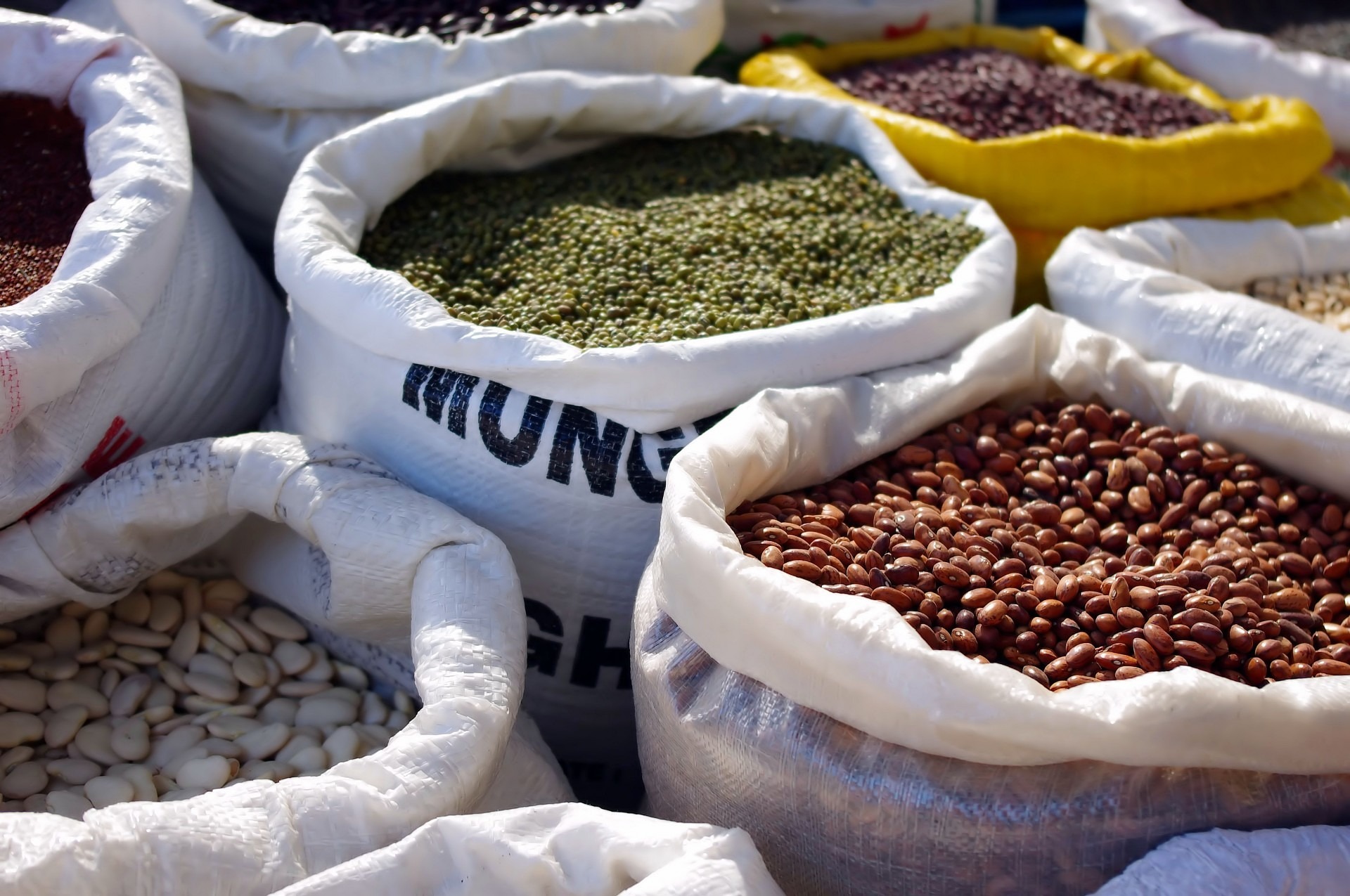
Bulk grains such as wheat are often pushed by survival food vendors as the only thing you need to survive in a long-term disaster, and they certainly have their place as part of a plan. If you are going to store wheat, you must store it in a sealed, dry container, preferably vacuum packed, and safe from insects. You also need to have a good quality grinder to process it into flour. Start looking at recipes and trying to make bread. Stock up on things like baking soda, sugar, and yeast so you can use the flour. Consider stocking more oats and rice that are easier to use as food. Some experts recommend storing hundreds or even thousands of pounds of grains as food and for barter.
Dried Pasta, Beans and Peas
Pasta is cheap and nutritious. If stored in sealed containers it can last several years, and if vacuum packed, it can last for decades. While it loses some nutrition over time, it still provides a highly edible meal. Stock some spaghetti sauce to go with it. Dried beans such as navy beans, pinto beans, split peas, and black-eye peas are economical and store well if kept in cool dry conditions. Vacuum packing is best. Beans and peas can get mold if allowed to become moist. Like grains, you need to have other components and seasonings to make palatable meals with them.
Freeze-Dried
I used a lot of freeze-dried meals back when I was into rock climbing and winter camping. Most of my evacuation pack foods are Mountain House™ meals, but I also have two MREs in case I can’t stop to boil water. If your space is limited,then freeze- dried may be a good option,but it’s costly, and requires fuel to boil water and a good supply of water. The portions in most of these meals is a bit skimpy and not enough to sustain you under high stress conditions. You will need supplemental nourishment.
Other Stuff
I have talked about peanut butter before. Peanut butter keeps well and has about 6000 calories per 40 oz. jar. This is why children gobble the stuff up. Don’t worry about additives and sodium, this is survival. Honey is another great concentrated source of nutrition that can be kept indefinitely. Canned nuts store well and provide a lot of nutrition per pound.I once ate canned sardines that had been in a buried cache for 25 years. The oil preserved them well and they tasted normal, but I cannot verify the nutritional value.
Conclusion
Regardless of the current state of your survival food stocks, you need to continue to build it up, as more and more potential disasters loom and the economy worsens. Don’t just focus on bulk. Your stored food should be things you and your family like to eat. Don’t depend on sheer hunger to drive you to eat unpalatable food or eat the same thing day after day. Stock up seasonings and sauces.Know how to prepare a variety of meals with what you have. You may still need to forage for some foods and use less than optimal foods. I include beef and chick-en bouillon cubes, salt, pepper, and hot sauce in my survival pack for this reason.
Recommended Reading
“How to Prepare Your Family for Every-day Disasters and Worst-Case Scenarios” by Lisa Bedford.